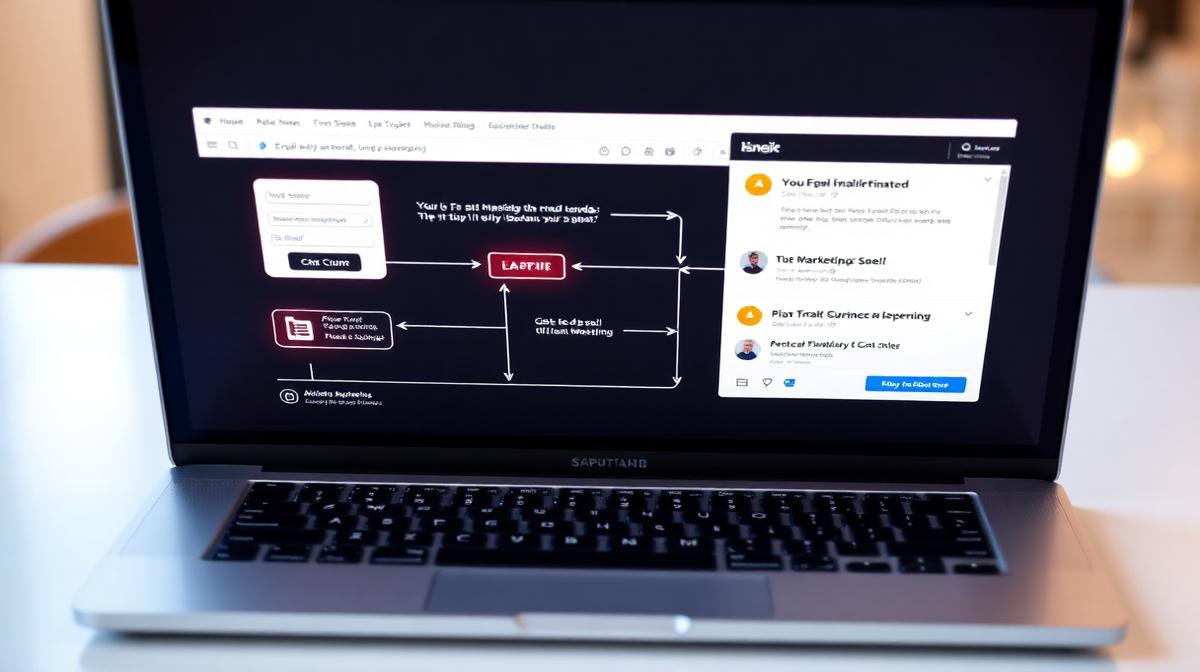
Email marketing delivers an average ROI of $42 for every $1 spent — making it the highest-returning marketing channel available. Yet most businesses barely scratch the surface of what modern email can do. In 2025, AI-powered automation and hyper-personalization are transforming email from a broadcast tool into a precision-targeted revenue engine.
The State of Email Marketing in 2025
Despite predictions of its demise, email remains the preferred communication channel for 73% of consumers when interacting with brands. What has changed is expectations. Generic batch-and-blast emails get deleted. Personalized, well-timed, value-driven emails get opened, clicked, and converted.
- Average open rate across industries: 21.3% (up from 18% in 2022)
- Personalized subject lines increase open rates by 26%
- Segmented campaigns drive 760% more revenue than non-segmented
- Automated email flows generate 320% more revenue than promotional emails
- Mobile accounts for 61% of all email opens
Essential Automated Email Flows
Automated flows are the backbone of modern email marketing. Once set up, they run 24/7, nurturing leads and driving revenue without manual effort. Every business should have these five flows active:
- Welcome series (3–5 emails): introduce your brand, deliver a lead magnet, build trust
- Abandoned cart/inquiry follow-up: recover 10–15% of lost conversions
- Post-purchase nurture: increase repeat purchases and encourage reviews
- Re-engagement campaign: win back subscribers who haven't opened in 90+ days
- Birthday/anniversary: personalized offers drive 481% higher transaction rates
AI-Powered Email Optimization
AI is revolutionizing email marketing in three key areas: content generation, send-time optimization, and predictive segmentation. Tools like Klaviyo, Mailchimp, and ActiveCampaign now use machine learning to determine the optimal send time for each individual subscriber, predict which products they're most likely to buy, and generate subject line variations that maximize open rates.
After implementing AI-driven send-time optimization for an Orlando e-commerce client, their email revenue increased 34% without sending a single additional email. Same content, smarter timing.
Personalization Beyond First Names
True personalization goes far beyond 'Hey {first_name}.' In 2025, effective email personalization means dynamic content blocks that change based on user behavior, product recommendations powered by purchase history, location-based offers (particularly powerful for Orlando businesses targeting tourists vs. locals), and lifecycle-stage messaging.
Writing Emails That Convert
- Subject lines: 6–10 words, create curiosity or urgency, avoid spam triggers
- Preview text: treat it as a second subject line — don't waste it
- Body copy: one idea per email, conversational tone, scannable format
- CTA: single, clear call-to-action — don't compete with yourself
- Design: mobile-first, brand-consistent, fast-loading images
- Timing: test send days (Tuesday–Thursday typically perform best)
List Building Strategies That Work
Your email list is a direct line to your customers that you own — unlike social media followers. Build it aggressively with high-value lead magnets, exit-intent popups, content upgrades, and in-person collection (for brick-and-mortar Orlando businesses). Aim for 2–5% monthly list growth.
Deliverability: The Hidden Conversion Killer
None of your email strategy matters if your emails land in spam. Maintain list hygiene by removing inactive subscribers quarterly, use authenticated sending domains (SPF, DKIM, DMARC), avoid purchased email lists, and monitor your sender reputation score. A clean list of 2,000 engaged subscribers outperforms a dirty list of 20,000.
Email marketing in 2025 is about sophistication, not volume. Invest in automation, embrace AI tools, and focus on delivering genuine value to your subscribers. The revenue will follow.