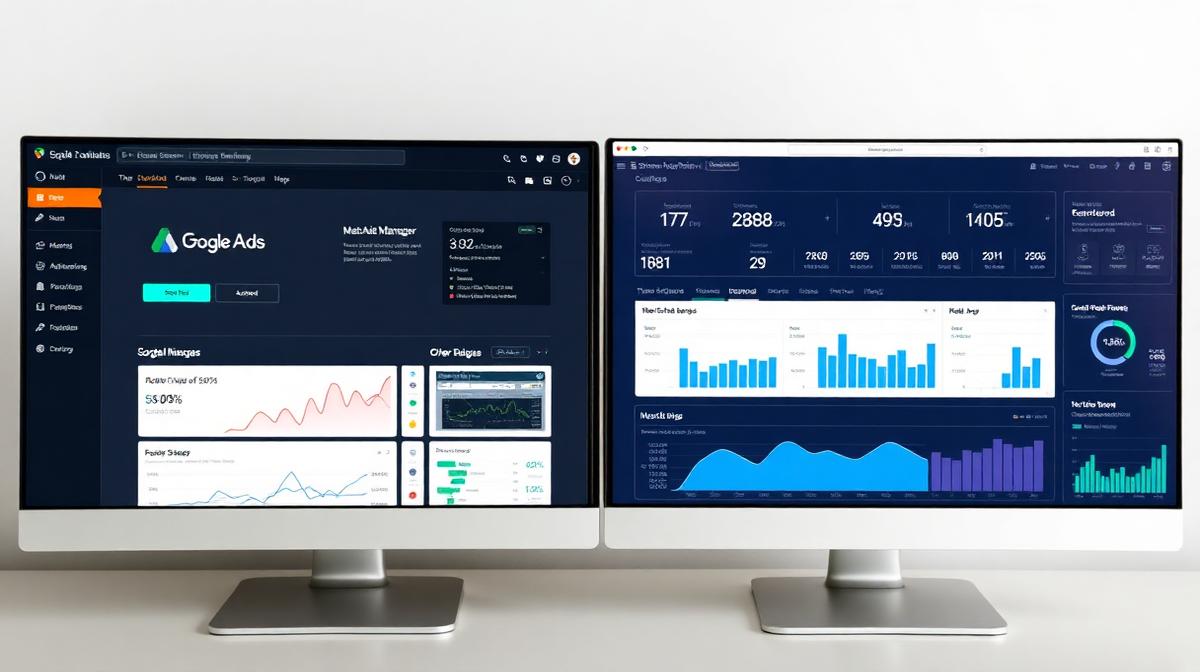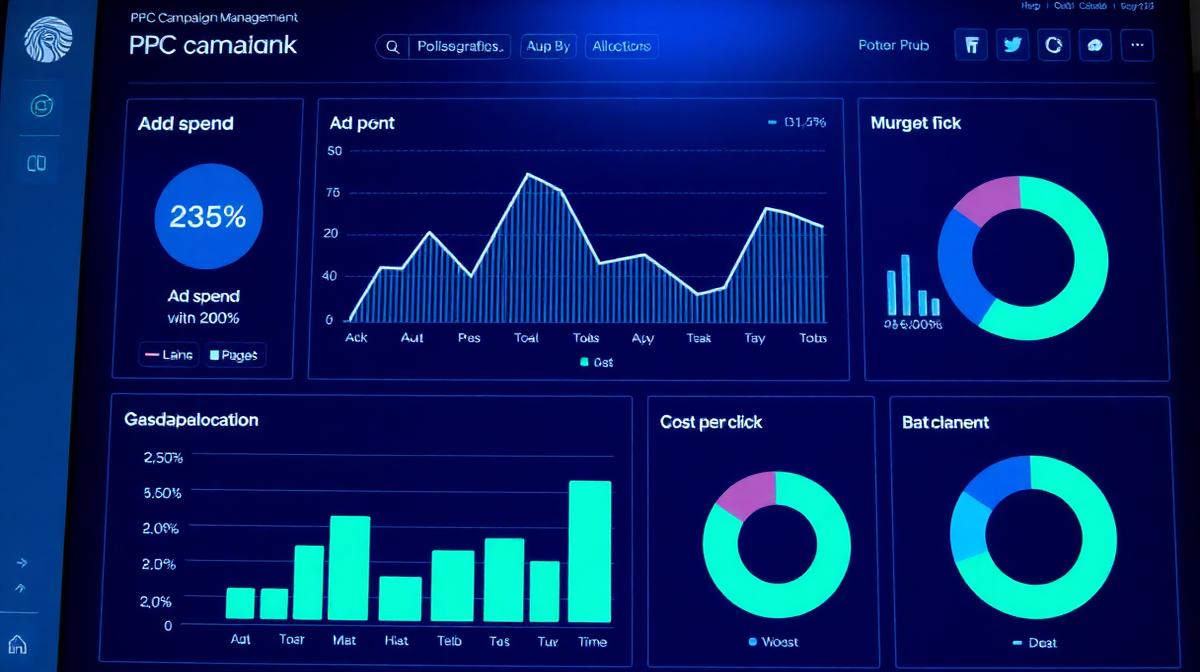
In the current landscape of digital advertising, your creative is the targeting. As Meta's Advantage+ algorithms take increasing control over granular audience selection, the difference between a failing campaign and one that scales sustainably lies entirely in the aesthetic and psychological resonance of your ad assets. Relying on gut feeling or 'proven' historical templates is no longer sufficient to maintain a competitive Return on Ad Spend (ROAS). Many brands experience a plateau where their cost per acquisition (CPA) spikes despite a healthy budget; this is rarely an algorithmic failure and almost always a creative fatigue issue. To combat this, we developed a rigorous, data-driven framework that shifted our perspective from 'making ads' to 'engineering outcomes.' By treating every video, static image, and headline as a variable in a scientific experiment, we recently helped a client achieve a 4x increase in ROAS within a single quarter. This post outlines the exact mechanism we use at Visionation to identify winners and eliminate waste in the Meta ecosystem.
The Shift from Granular Targeting to Creative-Led Growth
For years, media buyers obsessed over interest groups, lookalikes, and complex layering to find their 'perfect' customer. However, with the introduction of App Tracking Transparency (ATT) and the subsequent rise of Meta's machine learning, the platform now performs best when given broad parameters and high-quality creative. The algorithm monitors who interacts with your content and uses those signals to find more people like them. If your creative is poorly aligned with your value proposition, you are essentially training the AI to find the wrong leads. This is why our digital advertising team prioritizes 'creative-led growth.' By focusing on the visual and psychological hooks within the ad itself, we allow the platform's natural processing power to optimize for the highest-value users without the restrictive barriers of manual targeting.
Phase 1: The Concept Sandbox and Variable Isolation
- The Hook: The first 3 seconds of a video or the primary headline of a static image that stops the scroll.
- The Visual Format: Testing User-Generated Content (UGC) against high-production lifestyle shoots or motion graphics.
- The Value Proposition: Highlighting different pain points, such as time-saving versus cost-efficiency or emotional gain versus risk mitigation.
- The Call to Action (CTA): Testing direct 'Shop Now' requests against softer educational 'Learn More' invitations.
- The Environment: Placing the product in different contexts, such as a professional office setting versus a chaotic home environment.
Phase 2: The Dynamic Creative Testing (DCT) Method
We utilize Meta's Dynamic Creative Testing at the campaign level to find the winning combination of elements. Rather than launching 50 individual ads, we group 3 videos, 2 headlines, and 2 primary text options into a single DCT set. This allows the algorithm to run permutations and gather data quickly. According to internal benchmarks and industry reports from platforms like HubSpot, high-growth accounts typically test 10x more creative iterations than stagnant ones. During this phase, we are not looking for a 4x ROAS immediately; we are looking for a 'Winning Concept' that exhibits a significantly higher Click-Through Rate (CTR) and lower Cost Per Click (CPC) relative to the account average. We typically run these tests for at least 72 hours—or until they reach a statistically significant number of impressions—before making any decisions.
Creative testing is not an expense; it is a premium on your future performance. If you are not spending 20% of your budget on finding what fails, you will eventually spend 100% of your budget on an ad that no longer works.
Identifying the 'Unicorn' Ad and Scaling Structure
Once the DCT identifies a winning combination, we move that specific post ID (PID) into a dedicated 'Scaling' or 'Winners' campaign. This is vital for maintaining social proof, as it keeps all likes, comments, and shares on a single asset rather than fragmenting them across multiple tests. This winners campaign is often structured as an Advantage+ Shopping Campaign (ASC) for our e-commerce and retail clients. While our creative team focuses on the visuals, our campaign management team monitors the 'thumb-stop rate' (3-second video views divided by impressions). If an ad can't stop the scroll, it doesn't matter how good the offer is. We look for a thumb-stop rate of at least 25-30% before considering an asset a candidate for high-scale spending.
The 3 Essential Metrics for Creative Evaluation
- Hook Rate: This measures the effectiveness of the initial visual. If this is low, we need new openers, not a new video.
- Hold Rate: The percentage of people who watch at least 15 seconds. If this is low, the middle of the video is too slow or lacks value.
- Conversion Rate (CVR): The ultimate litmus test. If people watch and click but don't buy, the creative has created a disconnect between the ad's promise and the landing page experience.
- ROAS: The trailing indicator that dictates whether the total volume of spend is sustainable for the business model.
Bridging the Gap Between Creative and CRM
One often overlooked aspect of Meta Ads success is what happens after the click. For lead-generation clients, particularly in the legal or healthcare sectors, we integrate the ad data with the client’s CRM. This allows us to see not just which ad generated a lead, but which ad generated a lead that actually converted into a high-value customer. By closing this feedback loop, we can refine our creative strategy to appeal specifically to the highest-LTV (Lifetime Value) segments. If our CRM data shows that UGC-style ads lead to faster sales cycles, we pivot our entire production schedule to double down on that aesthetic. This holistic view ensures that we aren't just optimizing for platform metrics, but for actual business revenue.
The Importance of GEO and LLM Optimization in 2024
The modern advertiser must also consider how their brand is perceived outside of direct clicks. With the rise of AI-driven search and generative engines, the language used in your Meta Ads helps define your brand's footprint in the digital ecosystem. Our Visionation GEO & LLM Optimization service ensures that the messaging in your high-scale ads is consistent with how Large Language Models categorize your business. When your Facebook Ads use consistent keywords and value propositions that mirror your organic presence, you create a flywheel effect. The AI learns that your brand is the definitive solution for a specific problem, which can lower your overall CPMs (Cost Per Mille) as your 'ad quality' score improves in Meta’s eyes.
Great creative is the result of a disciplined process, not a sudden flash of inspiration. Data tells you where the opportunity is; art reveals how to capture it.
Common Pitfalls That Kill ROAS Performance
- Over-production: Making ads that look too much like commercials, causing users to immediately recognize them as interruptions and scroll past.
- Ignoring the 'Ugly' Ad: Frequently, a poorly designed graphic with high-contrast text outperforms a polished brand asset because it stands out in a clean feed.
- Scaling too fast: Increasing budgets by more than 20% every 48 hours, which can reset the learning phase and cause performance to dip.
- Lack of iteration: Finding one winner and failing to test 'iterations' (small tweaks to that winner) to extend its lifespan.
- Landing page misalignment: Sending traffic to a generic homepage instead of a specialized landing page that mirrors the ad's creative.
Establishing a Sustainable Creative Cadence
To achieve a 4x ROAS and keep it there, you must establish a 'Creative Cadence.' This is the frequency with which you refresh your assets to stay ahead of creative fatigue. For most mid-market brands, this means testing 2-4 new concepts every month. Larger accounts may require weekly refreshes. At Visionation, we coordinate these efforts across departments, ensuring that the insights gained from our SEO & SEM team—such as high-performing search keywords—are integrated into the copy of our Meta Ads. This cross-channel synergy ensures that we are speaking the language of the consumer at every stage of their journey, whether they are actively searching or passively scrolling.
Conclusion: The Path to Scaling Your Meta Ads
Scaling on Meta is no longer a matter of 'hacking' the platform; it is about building a machine that consistently produces, tests, and identifies high-performing creative. By isolating variables, utilizing Dynamic Creative Testing, and using CRM data to validate lead quality, you can move away from volatile performance and toward predictable growth. Our 4x ROAS success story was built on this exact foundation of disciplined testing and refusal to settle for average metrics. If your current advertising strategy feels like a game of chance, it may be time to implement a framework that treats your ad spend with the scientific rigor it deserves. Visionation is here to help you navigate these complexities and turn your creative assets into your most powerful growth engine. Reach out to our team today to discuss how we can apply these testing strategies to your specific business goals.